What it is
A full course on how a four-stroke engine works, built around a 3D model that moves like a real one. It has 14 lessons in 5 modules, saved progress and a final quiz.
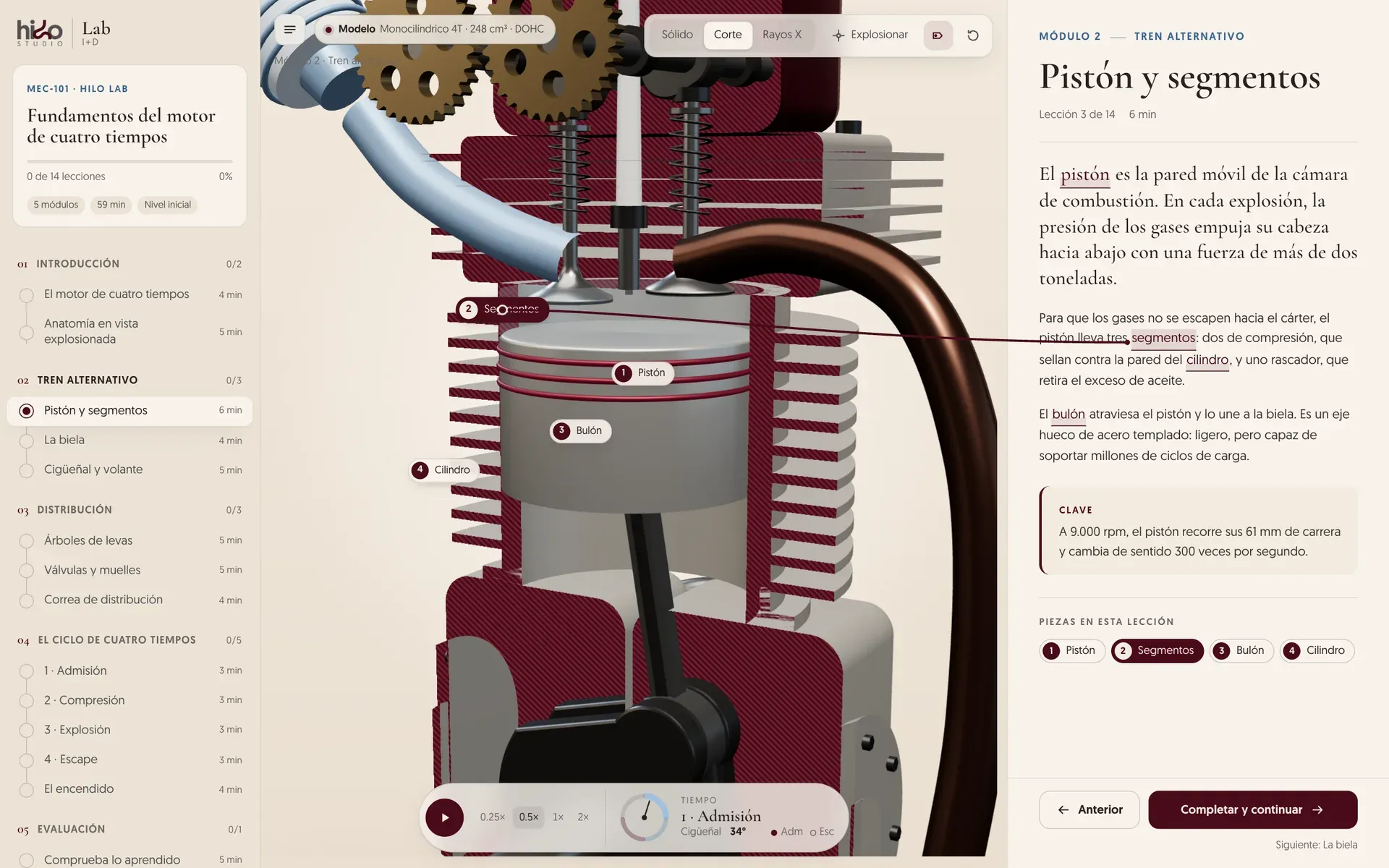
The idea we wanted to test: the text and the model talk to each other. When the lesson says “connecting rod”, the rod lights up on the engine and a burgundy thread links the word to the part.
How to use it
- Spin and zoom by dragging or with the mouse wheel (on a phone, with your fingers).
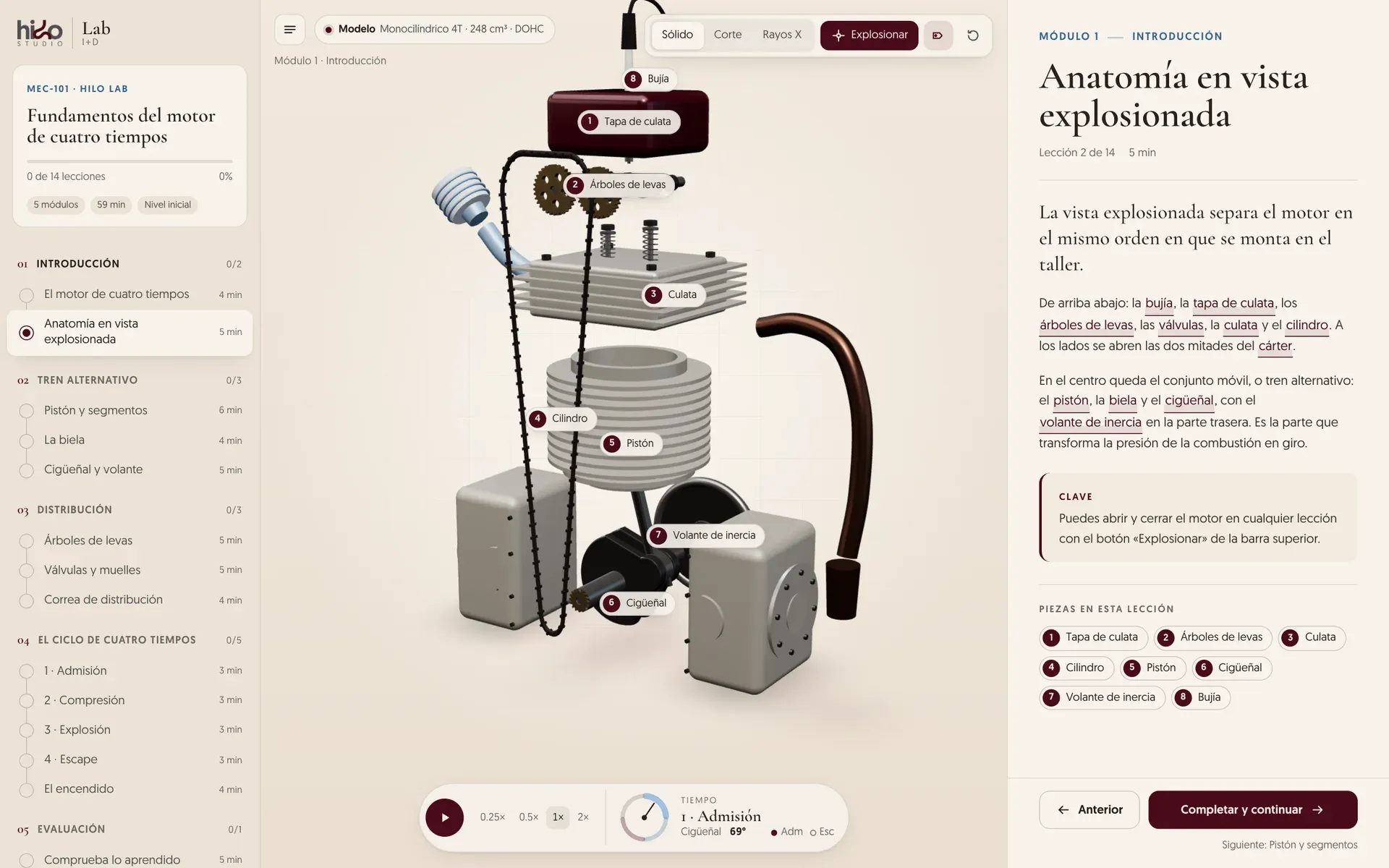
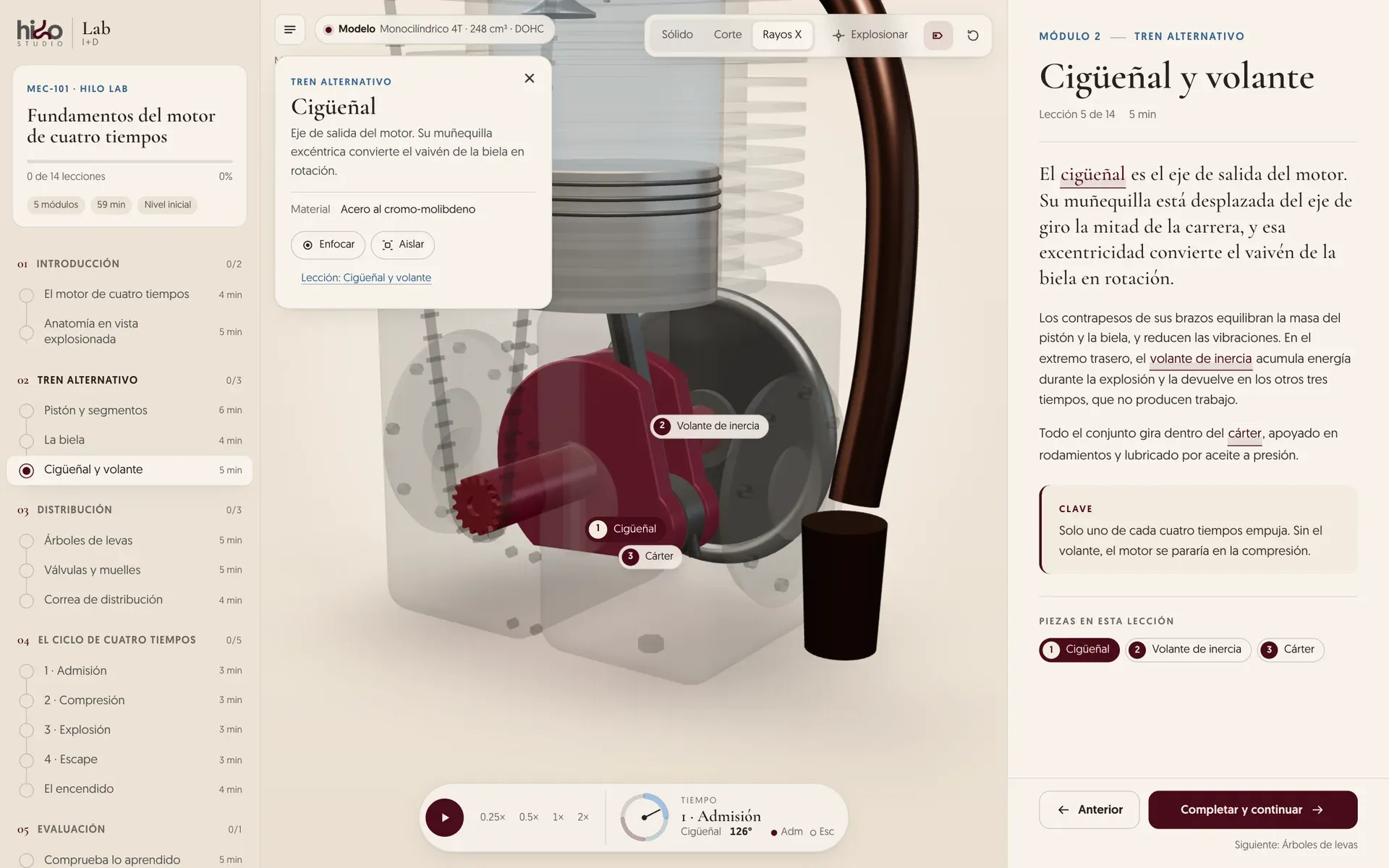
- Switch views between solid, cutaway and X-ray, or explode the engine to see it part by part.
- Hover over the underlined words in the text: we point at each part on the model.
- Tap any part to see its details, isolate it or jump to the lesson that explains it.
- Take the quiz: for some questions, the answer is pointing at the part on the engine.
What it explores
- Real-time cutaway: the engine opens down the middle and the section is drawn with technical-drawing hatching.
- Animation driven by real physics: piston, rod, crankshaft, cams and valves move with the kinematics of a real engine, in sync with the four-stroke cycle.
- Text that points at the 3D: every term in the course is linked to its part.
The same system works for any product with parts to explain: a machine, technical equipment or a home appliance.